34.9074° S, 138.5689° E
The Original Rivalry: Proof the Beautiful Game Is Alive Down Under
The Original Rivalry: Proof the Beautiful Game Is Alive Down Under
The Original Rivalry is ironically young when measured against football in Europe and much of the wider footballing world. Adelaide United were founded in 2003, Melbourne Victory in 2004. Yet this rivalry was never manufactured. It emerged naturally, almost stubbornly, from circumstance, ambition, and timing.
When the A-League launched in 2005, Adelaide United were outsiders in every sense. The only club from outside Australia’s traditional east-coast power base, they carried the weight of an entire footballing state on their shoulders. South Australia has long seen itself as different and Adelaide United quickly became a vessel for that identity. Compact. Community-driven. Sometimes abrasive, always proud.
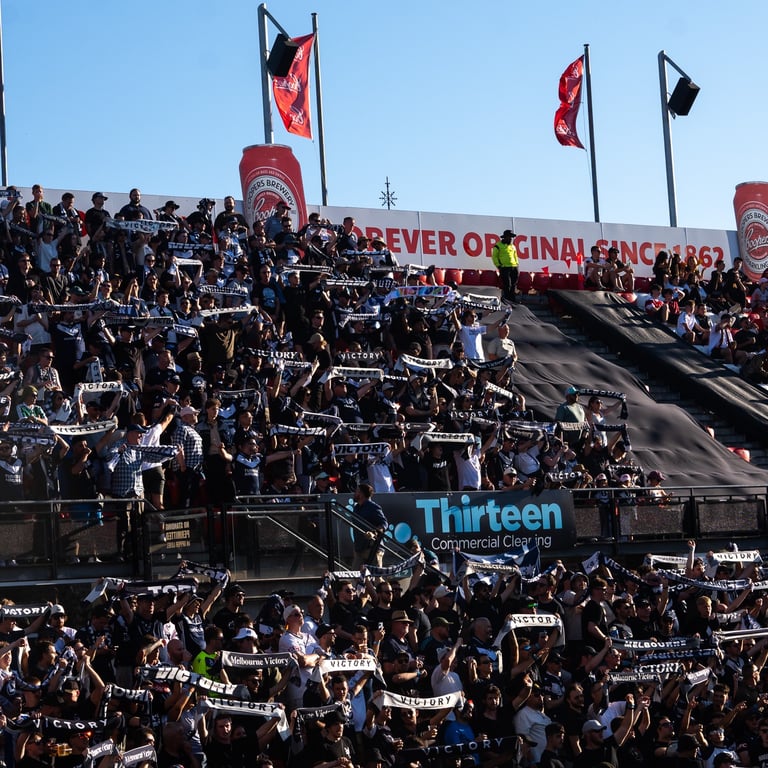
Melbourne Victory, by contrast, arrived as the league’s flagship. Backed by big crowds, big personalities, and the scale of one of Australia’s largest cities, Victory positioned themselves early as the top dogs. They embraced the theatre of dominance: banners, noise, intimidation. Where Adelaide leaned into unity, Melbourne leaned into power.
Over time, the rivalry earned its name: The Original Rivalry. Not because it was the oldest in Australian football history, but because it was the first rivalry the A-League truly felt.
It was organic.
It had edge.
It carried consequence.
And crucially, it was about more than football.
It was Adelaide versus Melbourne, the compact against the colossal, the provincial against the powerful, the underestimated against the assumed. Two cities with long-held chips on their shoulders, two sets of fiercely proud supporters, meeting in a competition still finding its identity.
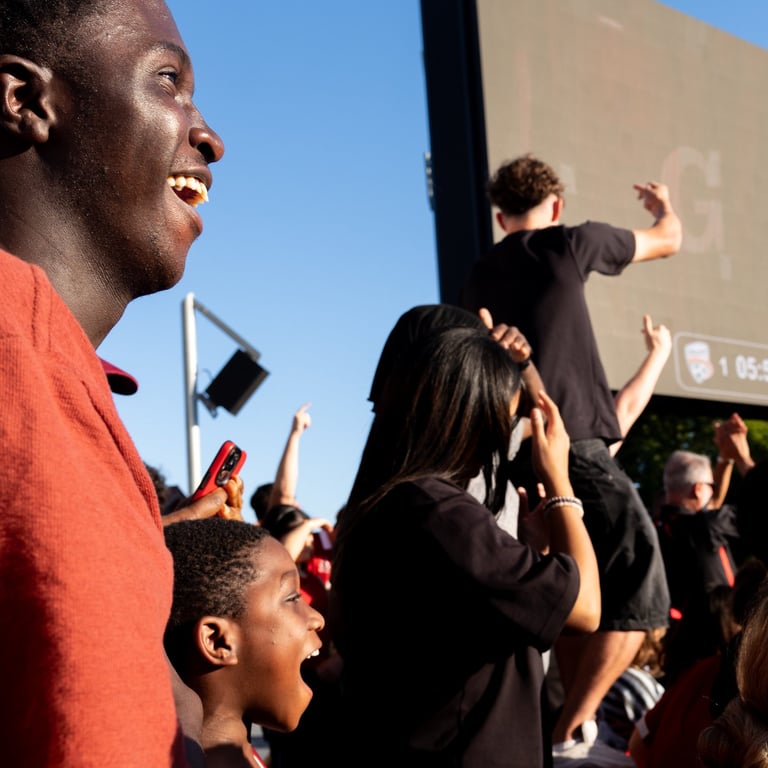
So when Adelaide United and Melbourne Victory meet, form, league tables, and even seasons fade into the background. These games exist in their own emotional register. All that matters is the ninety minutes.
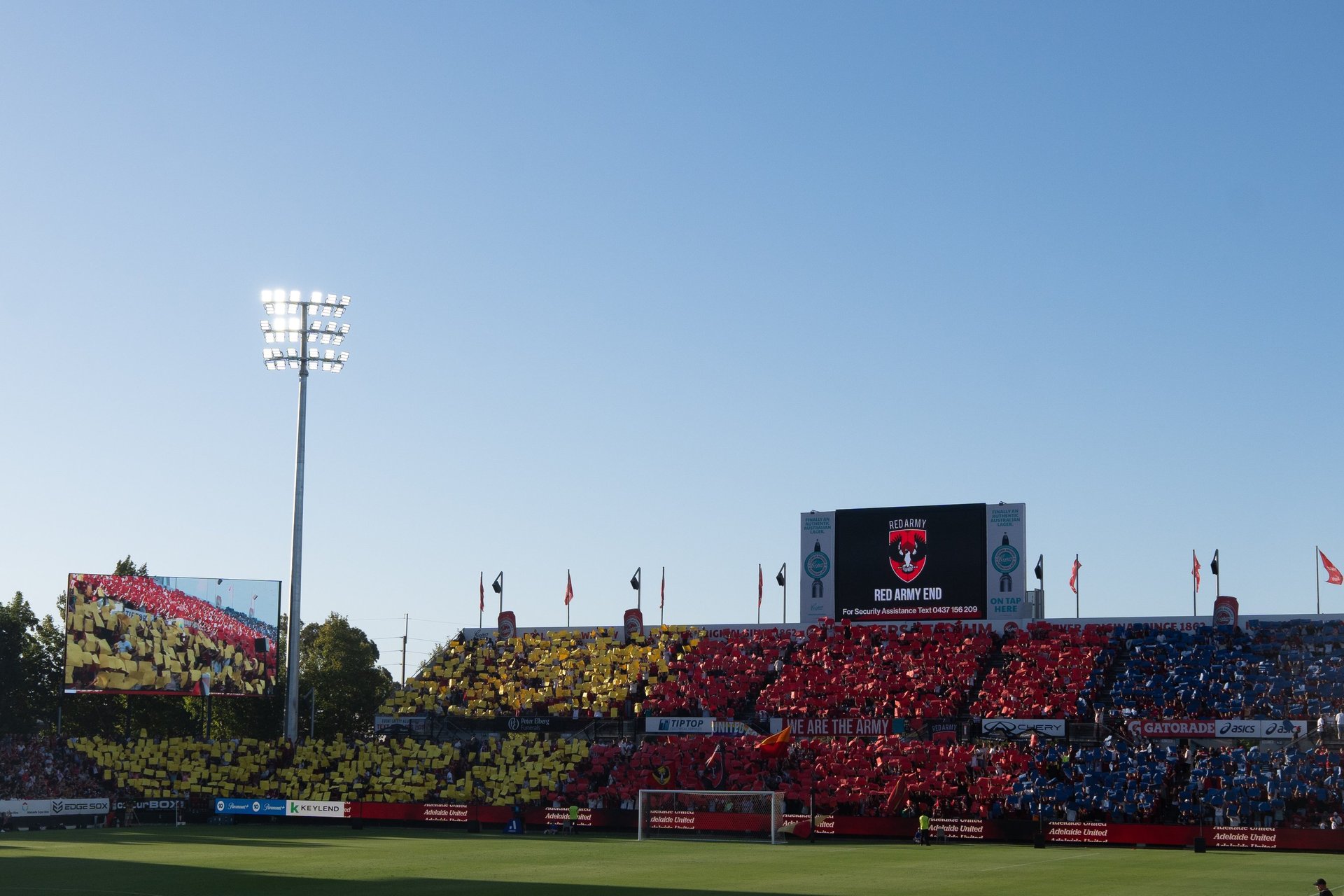
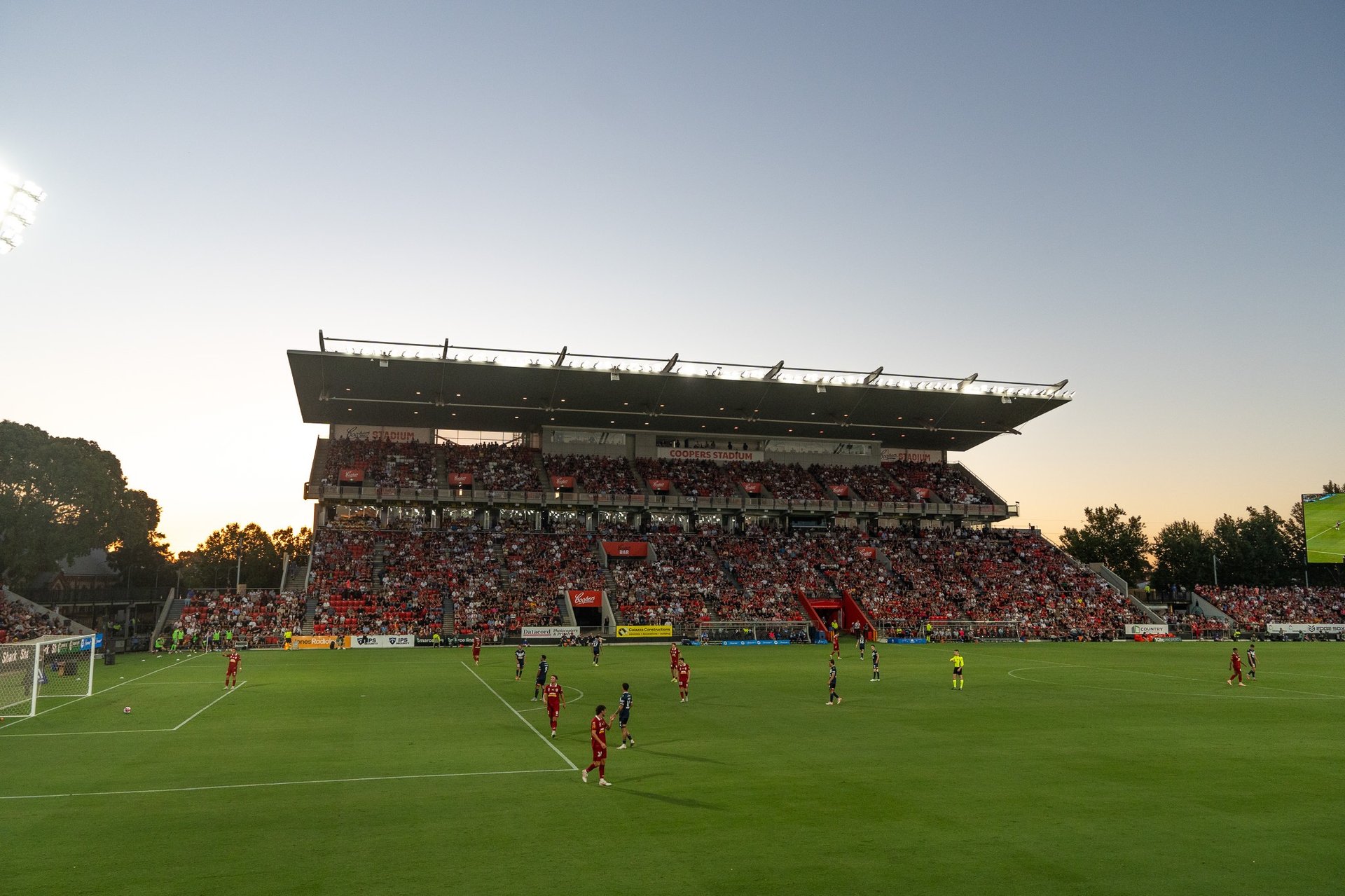
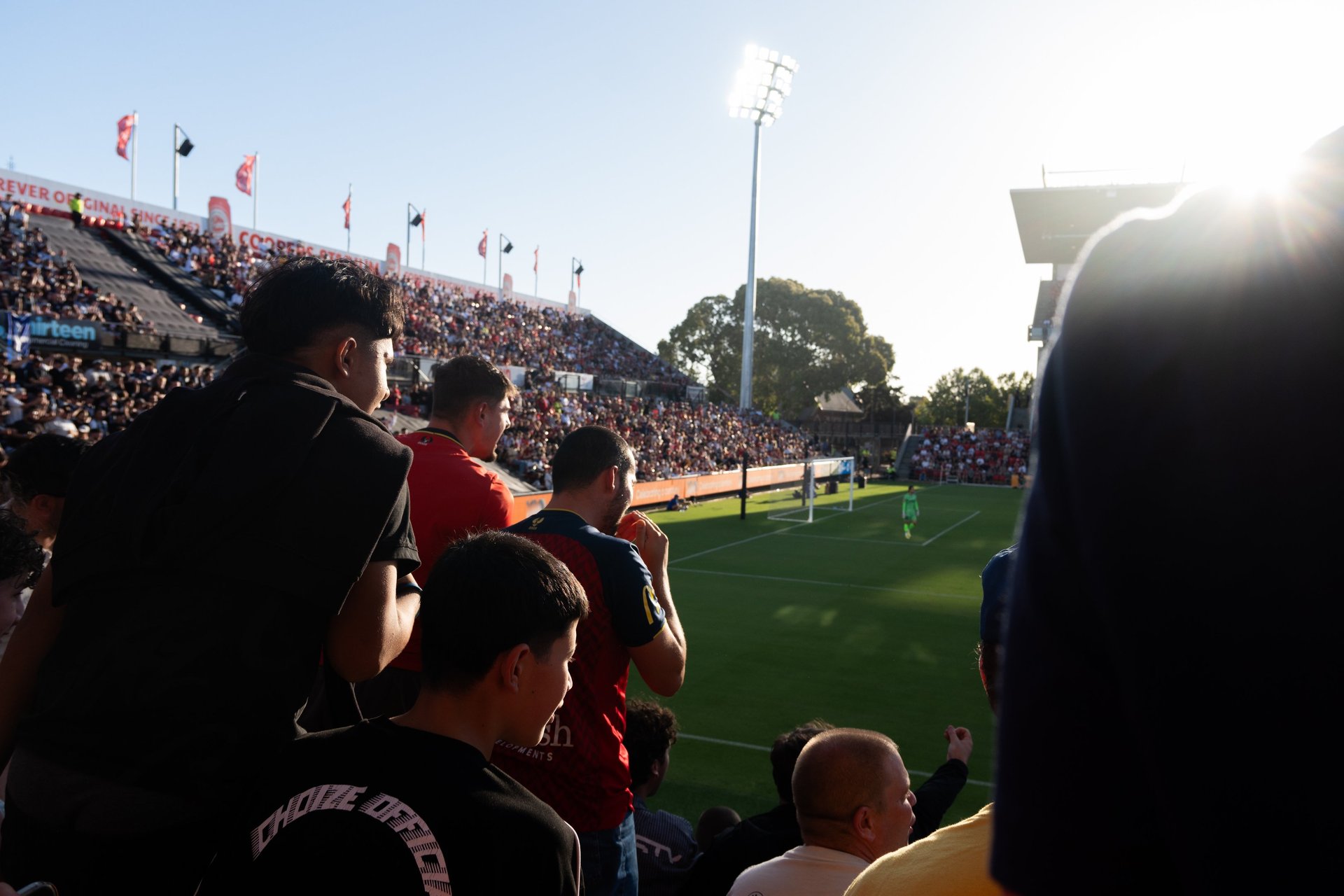
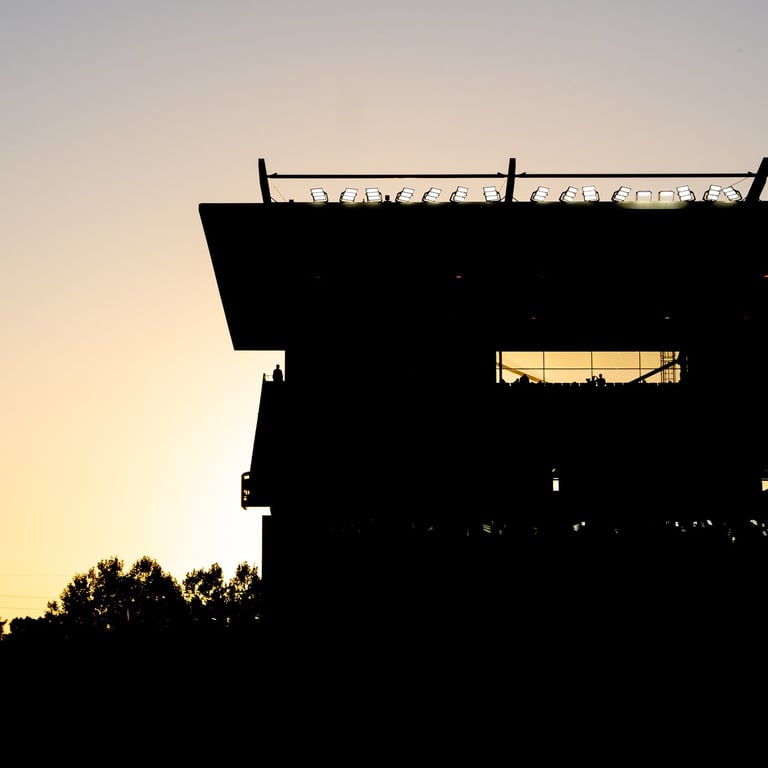
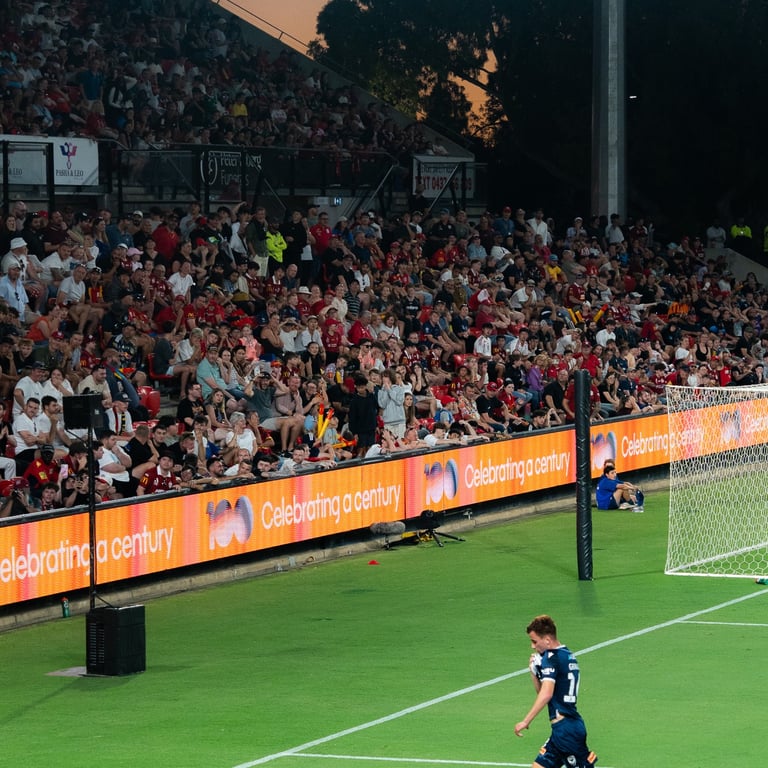
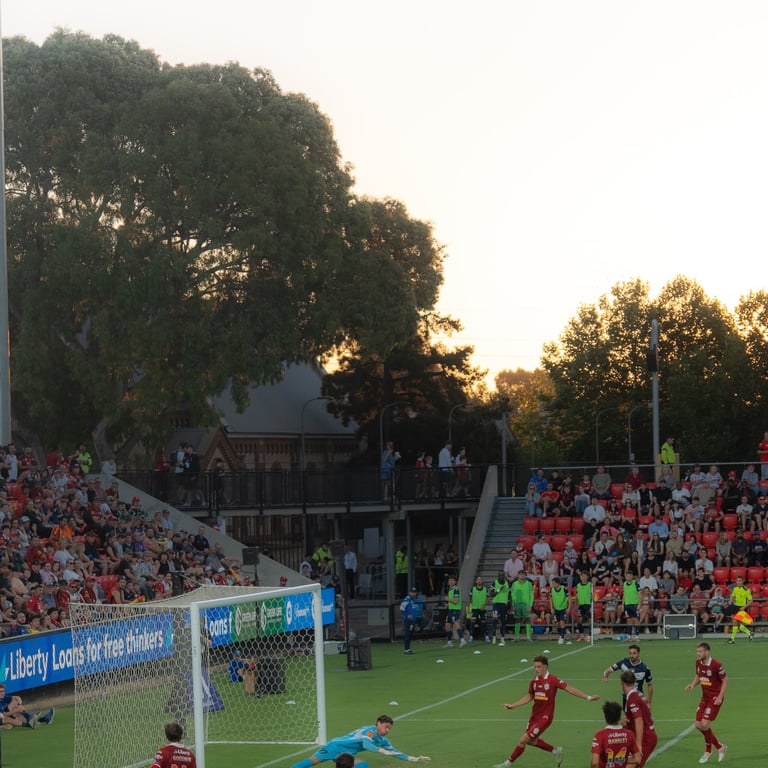
Few would argue against Coopers Stadium being listed among the most aesthetically pleasing football grounds in the world. It is beautiful to the eye and expressive in emotion, a stadium that shows as much as it contains. As the sun sets over South Australia and the Original Rivalry kicks off, there is no better stage.
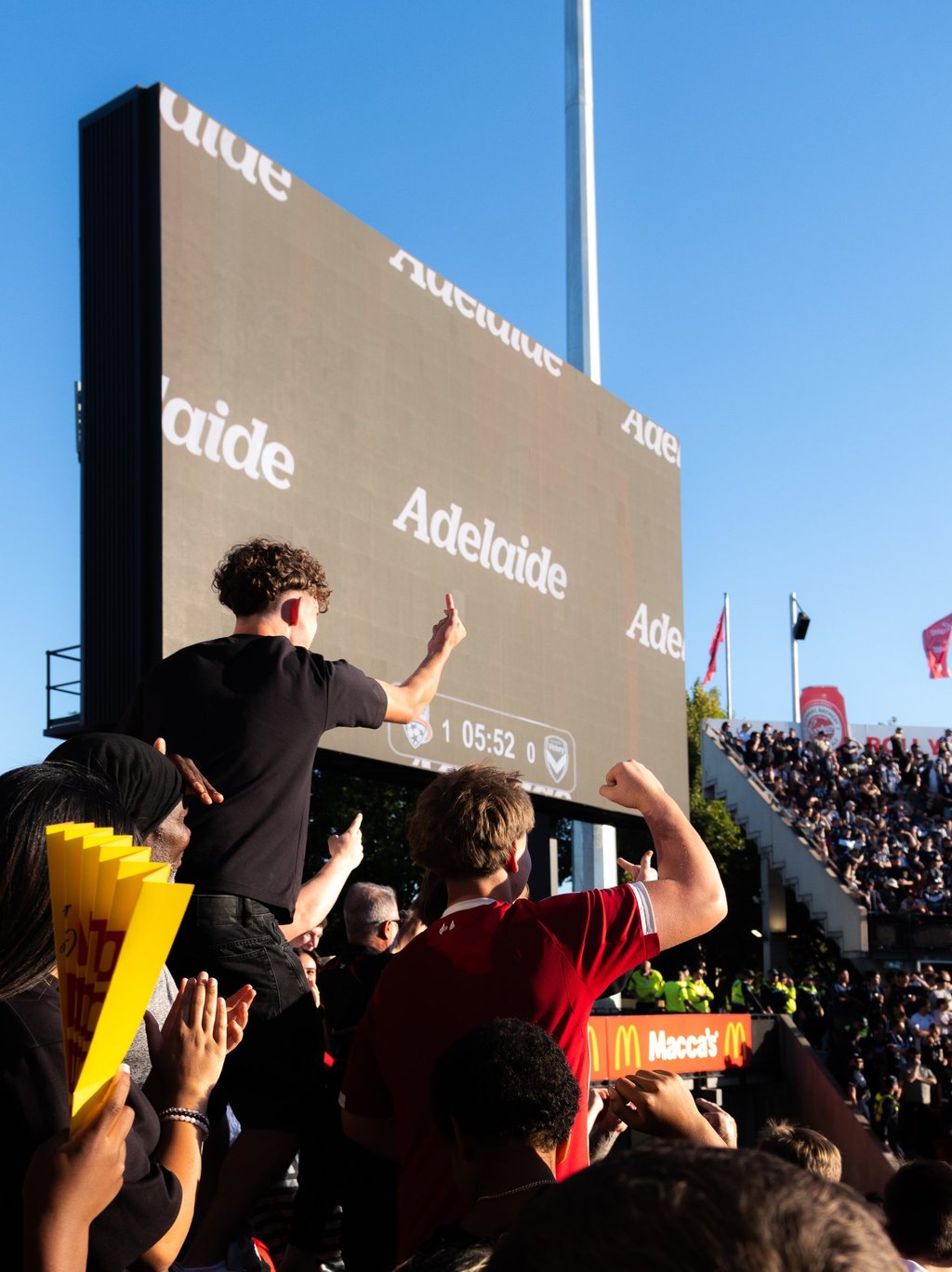
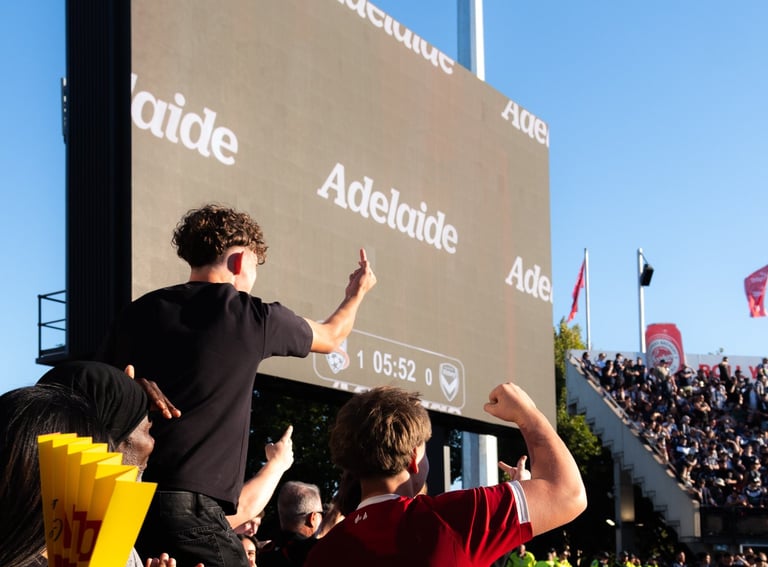
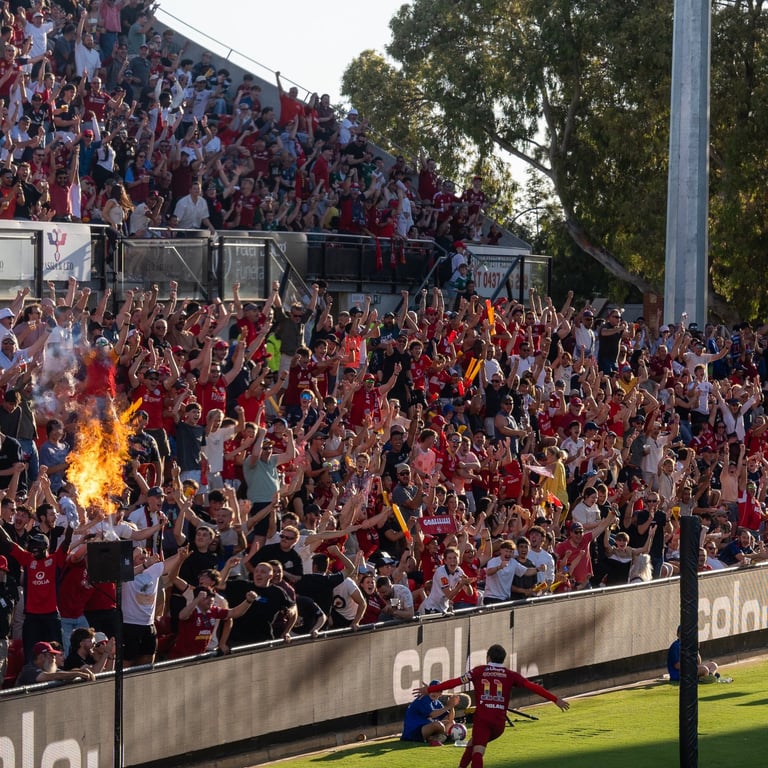
From the opening whistle, the energy on the pitch mirrored that in the stands. Erratic, fast-paced, and raw. Both sides played with belief, urgency, and edge. It didn’t take long for the breakthrough. In the 6th minute, Craig Goodwin, a genuine Adelaide United legend and leader, broke the deadlock and sendt the home end into rapture. From there, Adelaide dominated, striking the post and spurning chances before the interval.
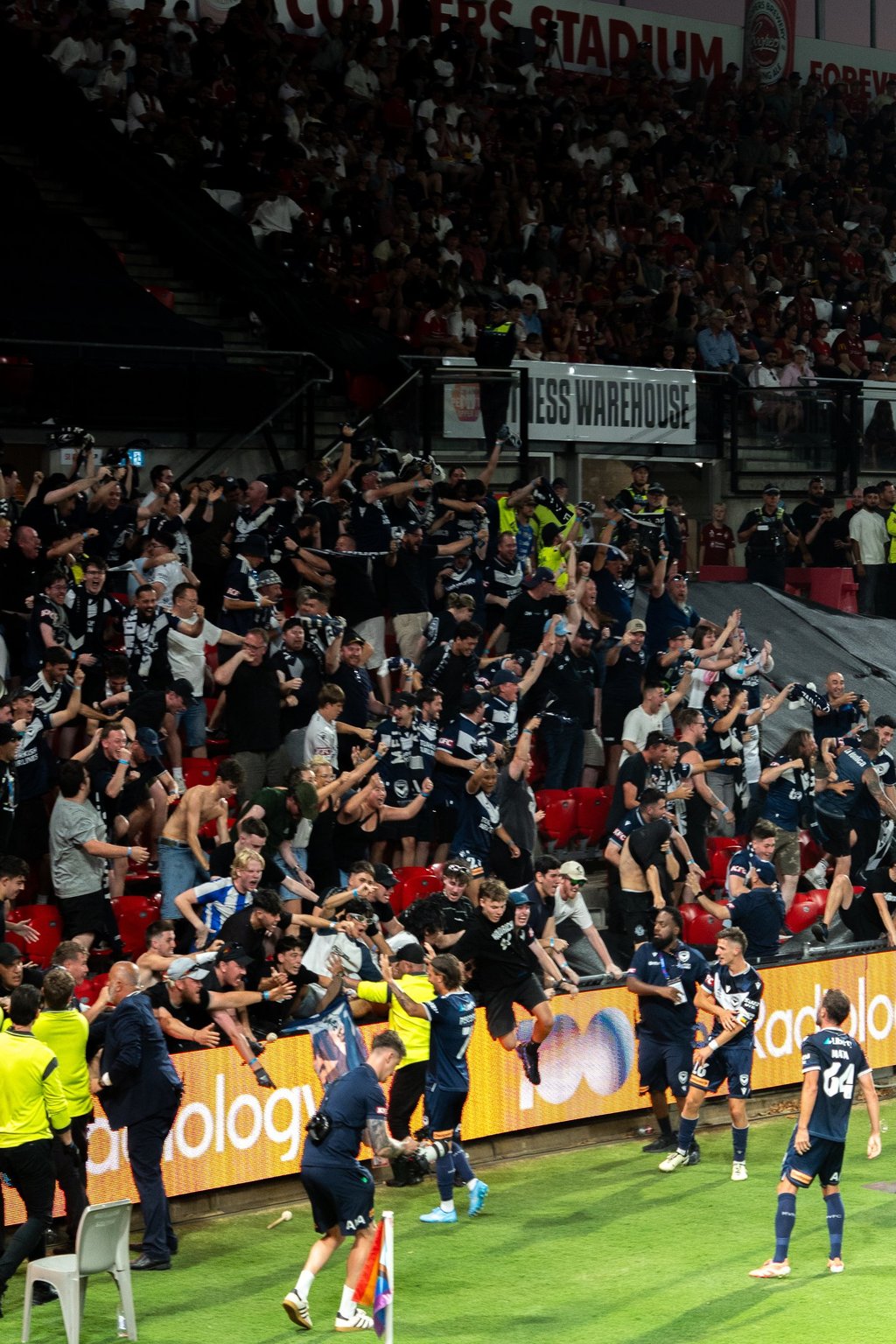
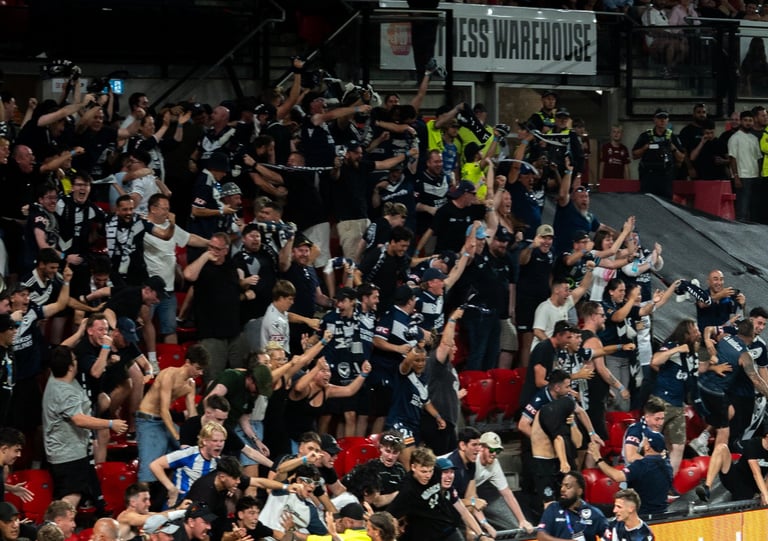
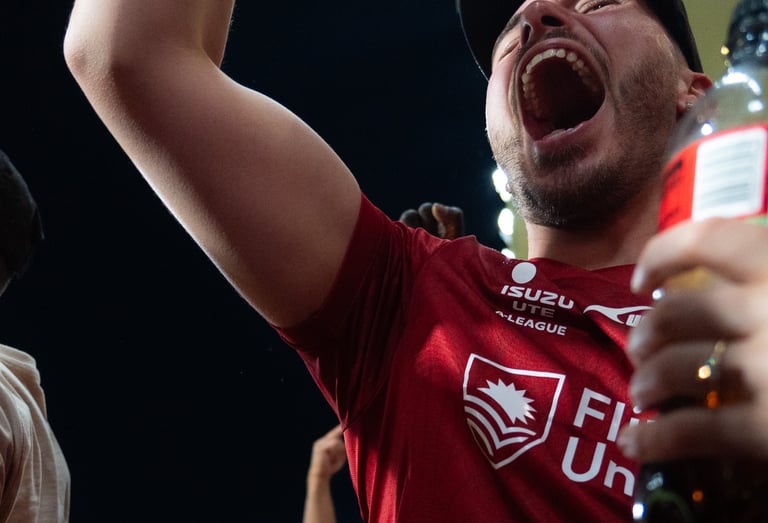
Whatever was said in the Melbourne dressing room at half-time worked. Victory emerged with renewed intent, and their persistence was rewarded in the 75th minute when Matthew Grimaldi equalised. The away end erupted, bodies tumbling over advertising boards and onto the pitch in unrestrained celebration.
What followed was chaos. End-to-end football. VAR disallowing a goal at each end. Tackles flying. The tension was tangible.
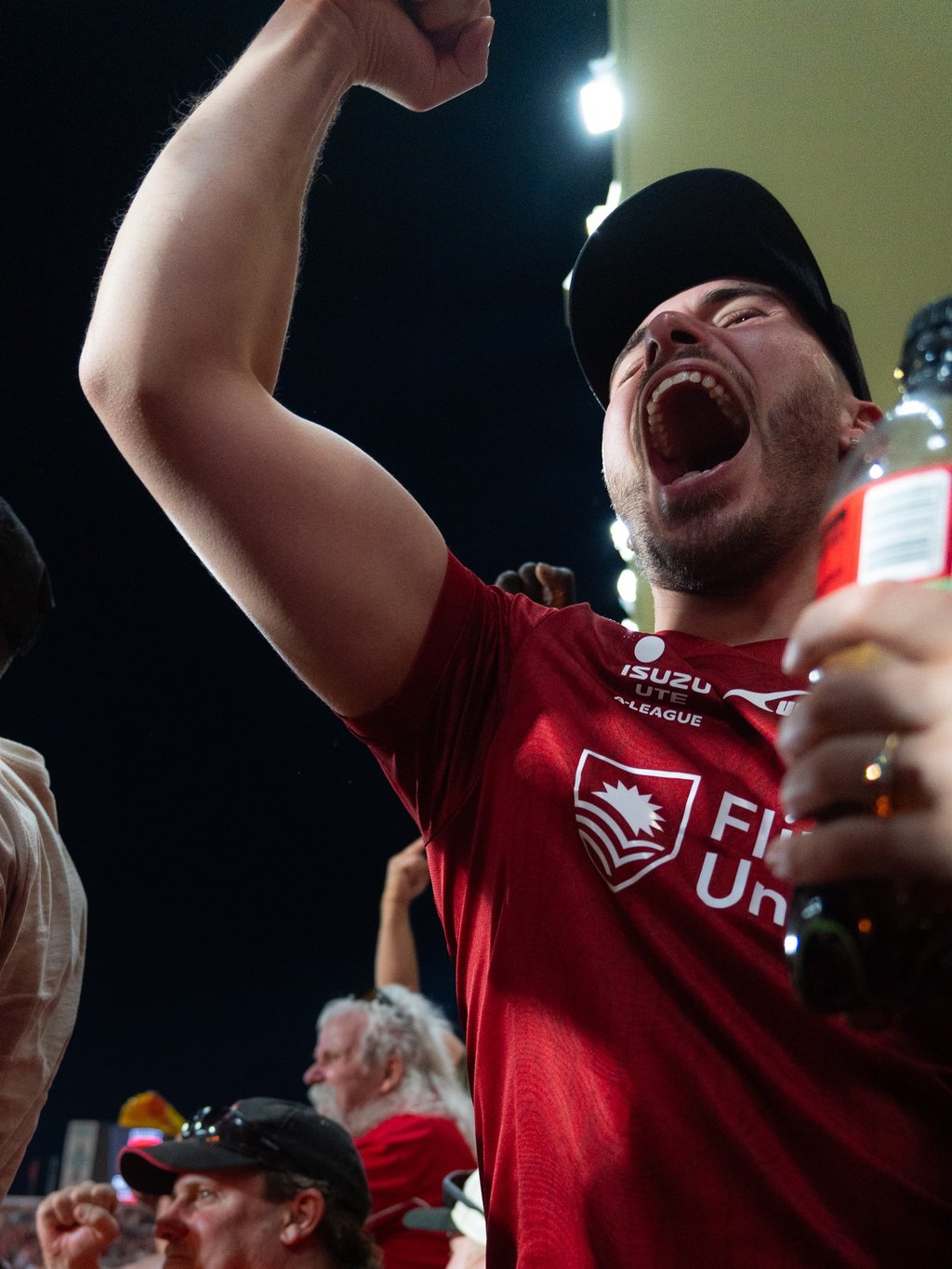
With ninety-seven minutes on the clock, jackets were zipped, exits eyed, and whistles anticipated. Then Ryan Kitto rose to meet a cross, looping a header over the goalkeeper and into the net.
2–1. Adelaide.
Victory, claimed.
A late goal at Coopers Stadium doesn’t just win three points.
It means a whole lot more.
This wasn’t just a derby. It was proof of something deeper, that A-League football, often underestimated in wider football culture, still holds drama, identity, and story in its DNA.
The shouts from the home fans of “F off back to Chelsea, Mata” were reminiscent of the game back home in Scotland. It was refreshing to hear the humour ironically paired with respect for a legend of the modern game.
What unfolded at Coopers suggested something: resilience, spirit, and unpredictability, are qualities that define football everywhere. And they’re alive here too, in fringe grounds and late winners and crowds that roar until they’re hoarse.
The A-League may be young in comparison to football as we know it, but youthful energy isn’t a flaw. It is opportunity: opportunity for moments that feel earned, for rivalries that grow in texture and history, for narratives that connect players, fans, and cities.
An opportunity to do things slightly different. And for a country to build it’s footballing soul.
Coopers Stadium on derby night isn’t just a place. It’s proof that football down under is alive, unpredictable, and deeply human.
The Original Rivalry